|
||||||||||||||||||||||||||||||||||
 |
||||||||||||||||||||||||||||||||||
Thursday 6th August 2026 |
||||||||||||||||||||||||||||||||||
|
|
|
|
|
|
|
||||||||||||||||||||||||||||
|
|
The Kelcey Walks - an extract
See, Leicestershire is the very centre of England and Quorn lies towards its northern boundary. We are about as far from the sea on every side as it is possible to be. Two great main lines of railway from London to the North touch the parish, and one of the great ancient main roads runs through our midst. This road passing here, no doubt, originally fixed the site for the village. Come with me now and stand on that road on the hill near the Mountsorrel Cemetery, which is on Quorn ground, and note that the road took its course where it did to avoid the great sweep of the river on the right, and the hill on which Buddon Wood grows on the left. And when the general course of the road was established, and a village built upon it with a Church, it is plain from this approach, as we noticed when we entered from the Loughborough end, that the Church Tower formed the mark for which travellers aimed as they made their way along the track. It must be remembered, that, except where the Roman conquerors of England made their roads about 2000 years ago, the ancient roads were very poor things. In old England there was little traffic, except on horse-back, even goods being carried on pack horses. By English Common law the repair of the roads was incumbent on each parish through which they passed. Coming to more recent times, the roads were improved by Turnpike Acts, by which the roads in different districts were put into the hands of a body of Trustees, who undertook to keep them in repair, and were allowed to take tolls at intervals, as for instance at the Toll-gate at the Woodhouse turn (see Paper 1). Within the memory of many aged people in Quorn the Coaches were the only public means of conveyance for passengers, and stage wagons carried the goods and such persons as could not afford the coach fares. I am told that 24 coaches passed through Quorn daily, and a good number of our older neighbours retain vivid pictures of them, made on their childish recollections. I am delighted to have found one old friend who remembers seeking a woman riding on a pillion, ie a side seat fixed on a horse’s back behind the saddle, upon which a woman sat behind a man. They were largely used by farmers to take their wives to market. There remains a tradition at Quorn of another form of conveyance, though I have not found anyone who actually saw it. It is said that when Mr Pollard, a Baptist preacher, died in 1818, the floods being out, his wife was carried to his funeral in a sedan-chair!. This Mr Pollard lived in the house now occupied by Mr Laundon. He also worked as a stone-mason, and his name is on several tombstones in the Churchyard. I have been astonished to hear that many people remember little vehicles carrying a person and goods drawn by dogs, passing through the village.
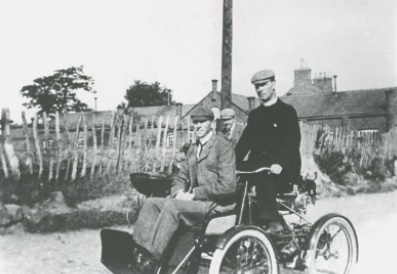
Rev Kelcey Since the making of the railways, there have been other wonderful changes in traffic which many of us remember well. About 45 years ago the first (wooden) bicycle appeared, to be succeeded by the high steel one ten years later; but the bicycle did not come into general use till the introduction of the ‘Safety’ bicycle in about 1885. We must not forget that it was the wonderful pneumatic tyre which made the bicycle efficient and popular. I believe that Mr Jas. Camm had the first bicycle in Quorn, and I think that the pneumatic tyred one which I brought with me in 1892 was the first of its kind in the parish. I wish all the quarrymen had a bicycle, that they might be saved the tramp to and from the quarries. I am sure it is the walk before and after the heavy day’s work which knocks up the older men, and yet they grow so attached to their own village that they never think of going to live at Mountsorrel. I shall never forget the horrified tone in which an old quarryman’s wife answered me when I once suggested it.
|
|
|
|
|||||||||||||||||||||||||||||
|
|
|
|
|
|
|
||||||||||||||||||||||||||||
|
||||||||||||||||||||||||||||||||||
|
||||||||||||||||||||||||||||||||||
|
||||||||||||||||||||||||||||||||||
|
||||||||||||||||||||||||||||||||||


 THE BEAUTIES OF OUR HOME III